

In today’s Amazon marketplace, success isn’t solely determined by price. With the evolution of AI-powered shopping assistants and increasingly skeptical customers, a brand’s reputation has become its most valuable asset. With thousands of sellers competing in every niche, customers rely heavily on reviews, ratings, content quality, and brand reputation before clicking “buy now.”
A strong Amazon brand reputation score lowers your Customer Acquisition Cost (CAC) and creates a protective “moat” around your business. If you are looking for long-term growth rather than just short-term sales, you must master the technical metrics Amazon tracks and the emotional trust consumers require.
This guide explains some simple and effective ways to build a strong and trustworthy Amazon brand reputation.
Key Metrics That Define Your Reputation on Amazon
Defining a reputation on Amazon involves two overlapping areas: Seller performance (operational reliability) and Brand Health (customer perception). Amazon uses these metrics to determine your “Buy Box” eligibility and organic search ranking.
1. Seller Performance: The “Reliability” Metrics
These live in your account health dashboard (AHD). If these slip, Amazon may suppress your listings or suspend your account.
- Order Defect Rate (ODR): The most critical metric. It includes Negative Feedback and A-to-Z Guarantee claims. Must be under 1%.
- Account Health Rating (AHR): A score from 0–1,000. Target 250+ to qualify for “Account Health Assurance.”
- Shipping Performance (FBM): Includes Late Shipment Rate (<4%) and Valid Tracking Rate (>95%).
- Customer Response Time: Percentage of messages answered within 24 hours. Aim for 90% or higher.
2. Brand Reputation: The “Consumer Trust” Metrics
For those in the Amazon Brand Registry, reputation is measured by loyalty and sentiment.
- Voice of the Customer (VOC): Categorizes your “CX Health” from Excellent to Poor. High Negative Customer Experience (NCX) rates can trigger automated listing takedowns.
- Brand Metrics: Tracks your conversion rate and “Awareness Index” compared to competitors.
- Repeat Purchase Behavior: A primary indicator of brand loyalty and product quality.
3. Public-Facing Social Proof
- Star Rating: 4.3 stars is the psychological threshold for most buyers.
- Seller Feedback Rating: A rating below 90% positive can lose you the Buy Box to competitors with similar pricing.
| Metric | Amazon Floor | Pro-Level Target |
| Order Defect Rate | < 1% | < 0.5% |
| Account Health Rating | 200 | 250+ |
| Star Rating | N/A | 4.3+ |
| Late Shipment Rate | < 4% | < 1% |
| Pre-Fulfillment Cancel | < 2.5% | < 1% |
9 Strategic Ways to Build a Trustworthy Amazon Brand
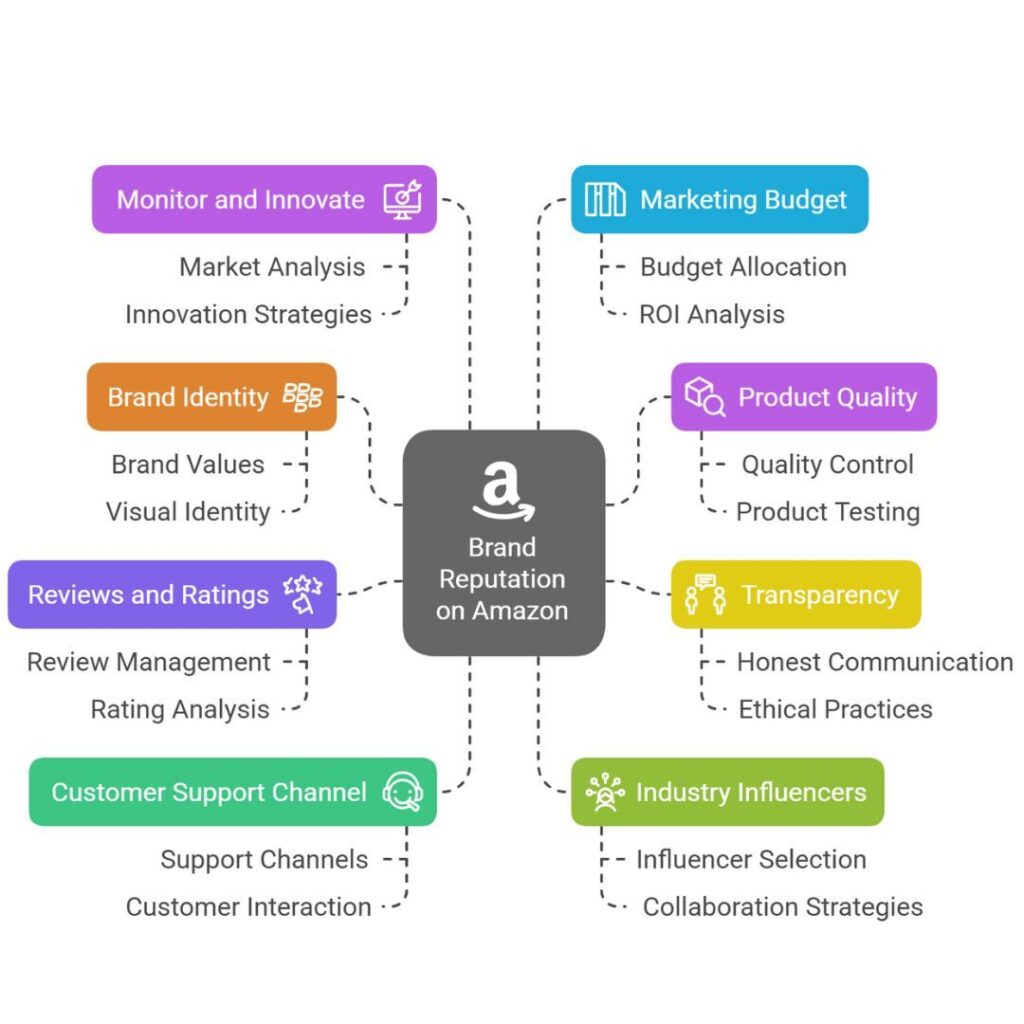
To achieve long-term success, focus on these key strategies to create a powerful and trustworthy Amazon brand reputation.
1. Partner with an Expert Amazon Marketing Agency
Maintaining a reputation is complex. Hiring an experienced Amazon marketing agency ensures your account is protected from algorithm shifts. Experts handle your account health and A+ content, allowing you to focus on scaling while they safeguard your brand from negative reviews.
2. Establish a Strong Brand Identity
Don’t exist only on Amazon. Build a strong brand identity by creating a professional website and active social media profiles (Instagram, TikTok, Facebook). This “off-platform” presence assures customers and Google that you are a legitimate, trusted entity.
3. Rigorous Product Quality Control
Before any launch, conduct quality checks personally. High-quality products naturally minimize return rates and earn the organic 5-star ratings that the Amazon algorithm craves. This also plays a crucial role in building a strong Amazon brand reputation over time.
4. Practice Radical Transparency
Detailed listings prevent “expectation gaps.” Use clear images, honest descriptions, and precise material attributes. Utilize Amazon A+ Content to tell your brand story and answer FAQs before the customer has to ask.
5. Proactive Review Management
Once orders flow in, use Amazon-compliant automation to ask customers for feedback. Authentic “words of the consumer” on your page are the most powerful conversion tool available.
6. Optimize Your Fulfillment Channel
If using Amazon FBA, Amazon handles the logistics. If using FBM, you must be flawless. Track every delivery and acknowledge complaints within hours to prevent A-to-Z claims.
7. Leverage Industry Influencers
People trust people, not just logos. Identify influencers in your niche to review your products on YouTube or social media. Their “word-of-mouth” publicity provides instant credibility to a new brand.
8. Monitor Competition and Innovate
Market leaders like Nokia failed because they stopped adapting. Use competitor tracking tools to monitor pricing, new launches, and marketing shifts. Staying agile helps you maintain a strong Amazon brand reputation in a competitive marketplace.
9. Invest in Strategic Marketing
To stay above the noise, you must invest in Amazon PPC. Run Sponsored Product and Sponsored Brand ads to ensure your logo is the first thing users see. High-quality EBC (Enhanced Brand Content) will then convert that visibility into sales.
Ready to dominate the Buy Box? Leverage our 7 years of Amazon expertise to skyrocket your sales and brand value. Book your free account audit and strategy session today.




Comments are closed.